If you’ve ever tried to memorize a list of 195 countries by staring at a map, you already know how quickly that plan falls apart. Names blur together, capitals slip out of memory the next day, and the whole thing starts to feel like a chore rather than something interesting.
Games fix that problem. When you turn geography into a challenge with a bit of competition, a timer, or just the simple goal of guessing correctly your brain treats it differently. You’re not memorizing anymore; you’re playing, and playing is what actually makes information stick.
Below are ten geography games that work well whether you’re a teacher planning a classroom activity, a parent looking for a rainy-day activity, or someone who just wants to finally stop mixing up Slovakia and Slovenia.
Why Games Work Better Than Flashcards
Flashcards rely on repetition alone, which is slow and easy to abandon. Games add three things flashcards can’t:
- Immediate feedback you find out right away if you’re right or wrong
- A bit of pressure timers and scores keep your attention locked in
- Variety no two rounds look the same, so your brain stays engaged instead of going on autopilot
A tool like a random country generator fits naturally into almost every game below, since it keeps the questions unpredictable and stops you from just memorizing the order of a fixed list. If you want a broader strategy first, our guide on how to learn countries of the world is a good starting point before jumping into games.
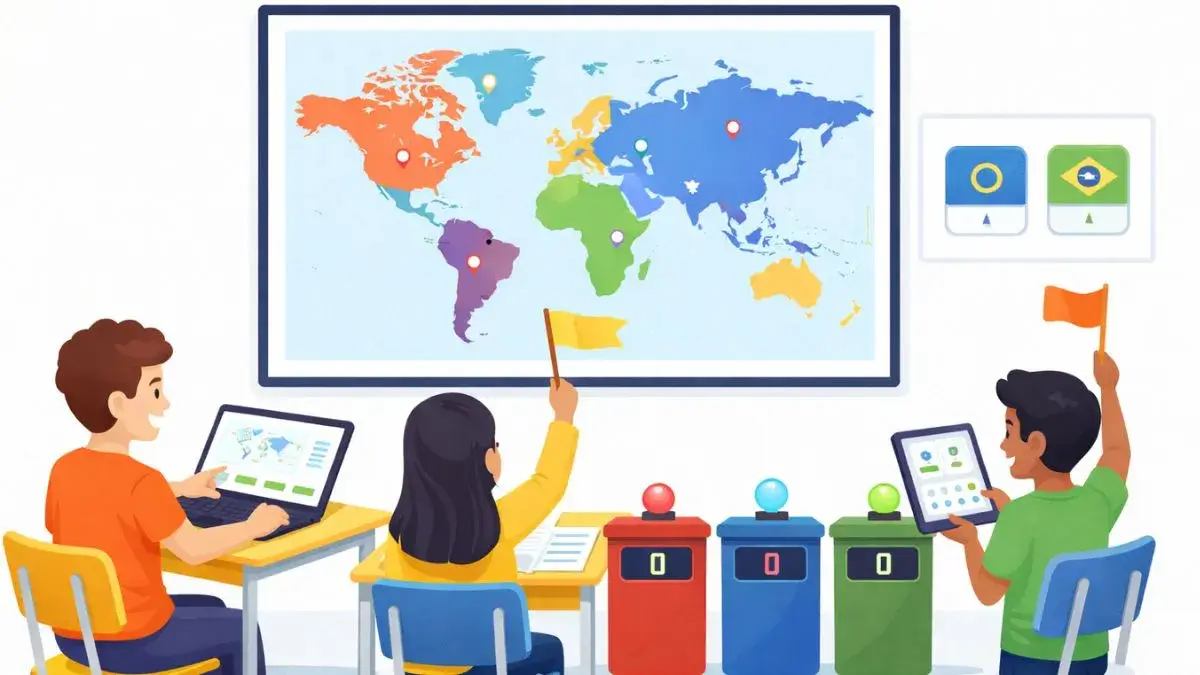
1. The Random Country Challenge
This is the simplest game on the list, and it’s a good starting point for beginners.
How to play:
- Generate a country using a random country generator
- Try to find it on a map within a set time (start with 15–20 seconds)
- Move to the next country and repeat
To make it harder, cut the time limit as you improve, or play in teams and keep a running score.
2. Capital City Match
This one pairs naturally with the Random Country Challenge but shifts the focus to capitals instead of location.
How to play:
- Generate a country
- Name its capital before a timer runs out
- Check your answer and move on
If you’re teaching a group, split players into pairs one calls out the country, the other answers. For a full reference while you practice, see our list of countries and capitals of the world.
3. Continent Sorting
Understanding where a country sits in the world is often more useful than knowing its exact borders. This game builds that instinct.
How to play:
- Generate a country
- Say which continent it belongs to, out loud or on paper
- Track how many you get right out of ten rounds
For focused practice, region-specific tools work well here try the random Asian country generator, random European country generator, or random African country generator to drill one region at a time. If you want the full picture first, our breakdown of countries of the world by continent is a useful reference to keep open while you play.
4. Speed Round
A straightforward way to build quick recall under pressure.
How to play:
- Set a timer for 60 seconds
- Generate as many countries as possible in that window
- Answer a quick question about each (capital, continent, or flag color) before moving to the next
Speed rounds work especially well as a warm-up before a longer study session.
5. Neighboring Countries
This is a step up in difficulty and works best once you’re comfortable with basic country locations.
How to play:
- Generate a country
- List as many of its bordering countries as you can
- Check a map to confirm
This game is particularly good for regions with dense borders, like Europe or Central Asia, where neighboring countries are easy to confuse.
6. Blank Map Labeling
A hands-on alternative for people who learn better by writing or drawing.
How to play:
- Print or sketch a blank outline map
- Generate a country
- Mark its approximate location on the map
- Compare against a real map afterward
This game is slower than the others, but it builds a stronger mental picture of where things actually are not just their names.
7. Flag Recognition
Flags are often easier to recognize than borders, which makes this a good confidence-builder early on.
How to play:
- Generate a country
- Try to picture or sketch its flag before checking
- Note any you consistently forget and revisit them later
8. Population & Size Guessing
A good game for building a general sense of scale, rather than exact facts.
How to play:
- Generate two countries at once
- Guess which one has a larger population, or a bigger land area
- Check the answer and keep score over several rounds
9. Team Tournament
For classrooms or larger groups, a tournament format adds structure and a bit of friendly competition.
How to play:
- Split the group into teams
- Generate a country for each round
- Mix question types capital, continent, flag, neighbors to keep things varied
- Track team scores and declare a winner after a set number of rounds
For more structured ideas along these lines, see our guide on random country generator classroom activities.
10. Themed Regional Rounds
Once the basics feel comfortable, narrow your focus to one part of the world at a time. This works better than trying to cover the whole planet at once, since it lets you notice patterns within a region shared borders, similar names, or common capitals.
Tools and references worth trying for this:
- North America: Random North American country generator · full country list · how many countries are in North America
- South America: Random South American country generator · full country list · how many countries are in South America
- Oceania: Random Oceania country generator · full country list · how many countries are in Oceania
- Africa: Random African country generator · full country list · how many countries are in Africa
- Europe: Random European country generator · full country list · how many countries are in Europe
- Asia: Random Asian country generator · full country list
Tips for Making These Games Stick
A few small habits make a noticeable difference over time:
- Keep a running list of countries you keep missing. Revisit that shortlist more often than the ones you already know.
- Mix game types instead of repeating one. Switching between capitals, flags, and locations keeps your brain from getting too comfortable with one format.
- Play in short, frequent sessions. Ten minutes a day beats one long session a week.
- Use randomness on purpose. Fixed lists are easy to memorize by order rather than by content — a random country generator prevents that shortcut.
If you’ve worked through these games and want to go further, check out our geography quiz ideas using a random country generator for more structured formats.
Frequently Asked Questions
Are these games useful for classrooms, or just individual study?
Both. Most of them work as solo practice, but they scale up easily into pair or team activities for a classroom setting.
Do I need any special equipment to play?
Not really. A random country generator and a basic map (physical or digital) cover most of these games. A few, like blank map labeling, benefit from a printed outline map.
What age group are these games suited for?
They work across a wide range younger learners tend to enjoy flag recognition and simple sorting games, while neighboring countries and population guessing suit older students and adults better.
How often should I play to actually improve?
Short, regular sessions work best. Even 10–15 minutes a few times a week tends to build recall faster than one long session occasionally.